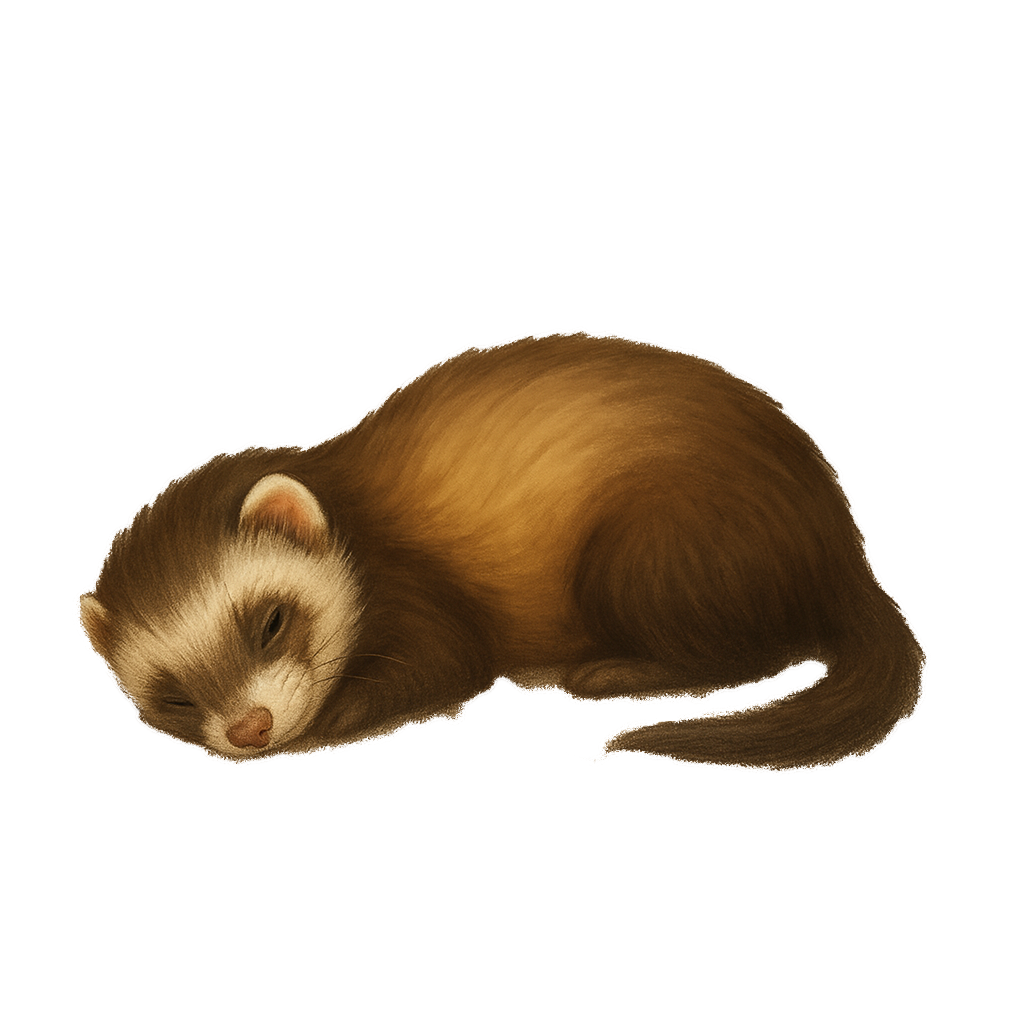
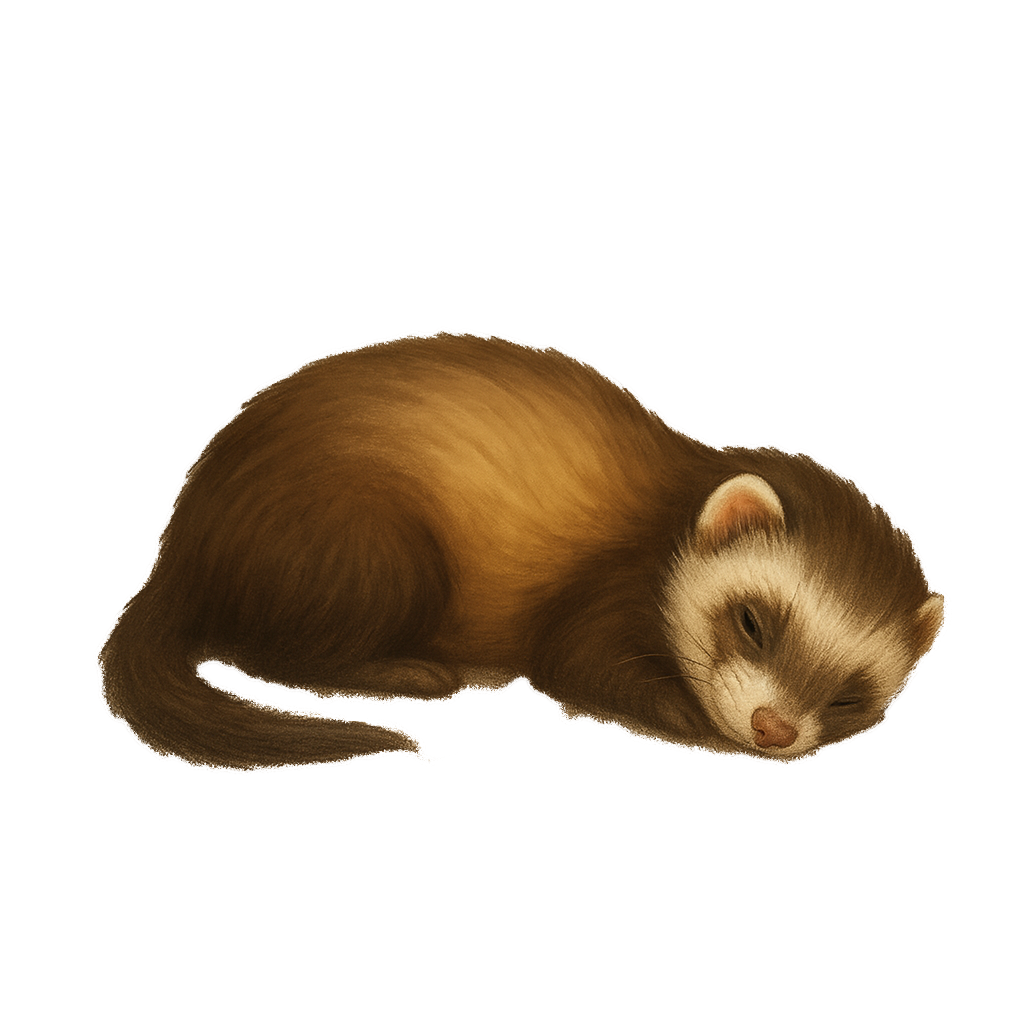



Ferret Origins
🧠 Ferret Fax: Origins, Domestication & Culture 🧠Ferrets haven’t always been cartoon-chaos plush pets that steal your socks and vanish under the couch. Their story began in wild tunnels, with hunters, farmers, and explorers — and now they’re ambassadors of curiosity and alliance in the digital age.
🌍 Wild Roots: Where They Came From
The domestic ferret (Mustela putorius furo) descends from the wild European polecat (Mustela putorius) — and possibly also the Steppe polecat (Mustela eversmannii). Genetic records suggest domestication began over 2,000 years ago for their hunting and burrow-chasing skills. Because of their close relation, ferrets and polecats can still interbreed, blurring the line between wild and domestic.
Somewhere around 2,000–2,500 years ago, humans realized these lithe hunters could be guided and trained — creating one of the quietest domestications in history.
🔧 Domestication: Why & How
Ferrets weren’t bred for beauty or companionship at first — they were tools. Farmers and hunters in ancient Europe bred the tamest, most trainable polecats to flush rabbits from burrows — a job that demanded both courage and slenderness. Over generations, the most cooperative individuals became our first domestic ferrets. The Latin roots say it all: putorius (“stinking”) and furo (“thief”). Their modern name comes from furonem — “little thief.”
📜 Cultural & Historical Milestones
- Ancient Greece & Rome: Writers like Aristotle mentioned small, weasel-like hunters used to chase rabbits and control shipboard pests.
- Medieval Europe: Ferreting became a rural craft — carrying sleepy ferrets in sacks, slipping them into warrens, and netting the rabbits that bolted.
- Age of Exploration: Sailors brought ferrets as rat-catchers, spreading them to new continents.
- 19th–20th Centuries: Used for rabbit control worldwide — sometimes too successfully — and later as beloved companions and lab helpers.
⚠️ Wild vs Domestic Realities
Selective breeding softened their edges: smaller size, gentler temperament, brighter coats. Albino, sable, and cinnamon shades emerged. Today’s domestic ferret is a full-time companion, yet still half-wild at heart — curious, playful, and fearless.
Ferrets can still hybridize with polecats, making the boundary between wild and domestic more of a whisper than a wall — part companion, part tunnel assassin.
🐾 Ferret Timeline: From Wild Hunter to House Legend
🌍 ~10,000 BCE – The Polecat Rises: Wild polecats roam Europe and western Asia — sleek, solitary, efficient. The ancestors of all domestic ferrets.
🏺 ~800 BCE – Early Taming: Farmers in the eastern Mediterranean begin capturing and semi-taming polecats to protect grain stores and hunt rabbits.
⚔️ ~400 BCE – Classical Records: Greek and Roman naturalists describe ferret-like animals used for pest control — the first written accounts of “ferreting.”
🛡️ 1000–1500 CE – Medieval Ferreters: Ferreting becomes a trade across Europe — monks, nobles, and peasants all rely on them.
⚓ 1600–1800 CE – Sailors & Settlers: Ferrets travel on ships as rat-catchers; later introduced abroad to manage rabbit populations.
🏠 1800–1900 CE – From Farm to Home: Industrialization reduces the need for ferreting; selective breeding creates gentler, more colorful companions.
🔬 1900–1950 CE – Ferrets in Science: Used in medical research on influenza and SARS; also cherished as mischievous pets.
🎮 1980–Present – Pop Culture Ferrets: From movies to memes, ferrets leap from barns to broadband — banned in a few states, loved everywhere else.
🧬 The Nature of Domestication
Ferrets are purpose-bred domestics, not wild animals turned tame. Selective breeding of European polecats created the playful, sociable pets we know today — proof that curiosity can evolve without being lost.
💭 Legacy & Symbolism
Ferrets have been hunters, sailors, farmers’ allies, and internet tricksters — survivors through every human age. They embody adaptability, stealth, and loyalty: small beings who learned to work with us without ever losing their wild spark.
“Once they hunted in burrows. Now they hunt for keys under couches. The instinct is the same — just rebranded for the 21st century.”